Jewels Legend - Match 3 Puzzle
- 4.7
- Rating
- 10.00M
- Installs
- Free
- Price

 Analysis by App-foxy
I first understood the appeal of Jewels Legend - Match 3 Puzzle within a few moves: swap two jewels, make a line, watch the pieces disappear, and immediately look for the next useful combination. It is a free arcade puzzle game from LinkDesks - Jewel Games Star, built for short bursts rather than long explanations. The controls are simple enough to learn instantly, but the board keeps asking small tactical questions that make one more attempt feel reasonable.
That familiar structure is both the game’s strength and its limitation. If you enjoy classic jewel-matching puzzles, this gives you a straightforward version that is easy to pick up and suitable for an Everyone audience. If you want a story, deep character progression, competitive multiplayer, or a constantly changing rule set, you may find the experience too traditional. After spending time with it, I see it as a dependable pocket puzzle: uncomplicated, quick to restart, and most enjoyable when I want something relaxing that still asks me to pay attention.
How the first move sets the whole session in motion
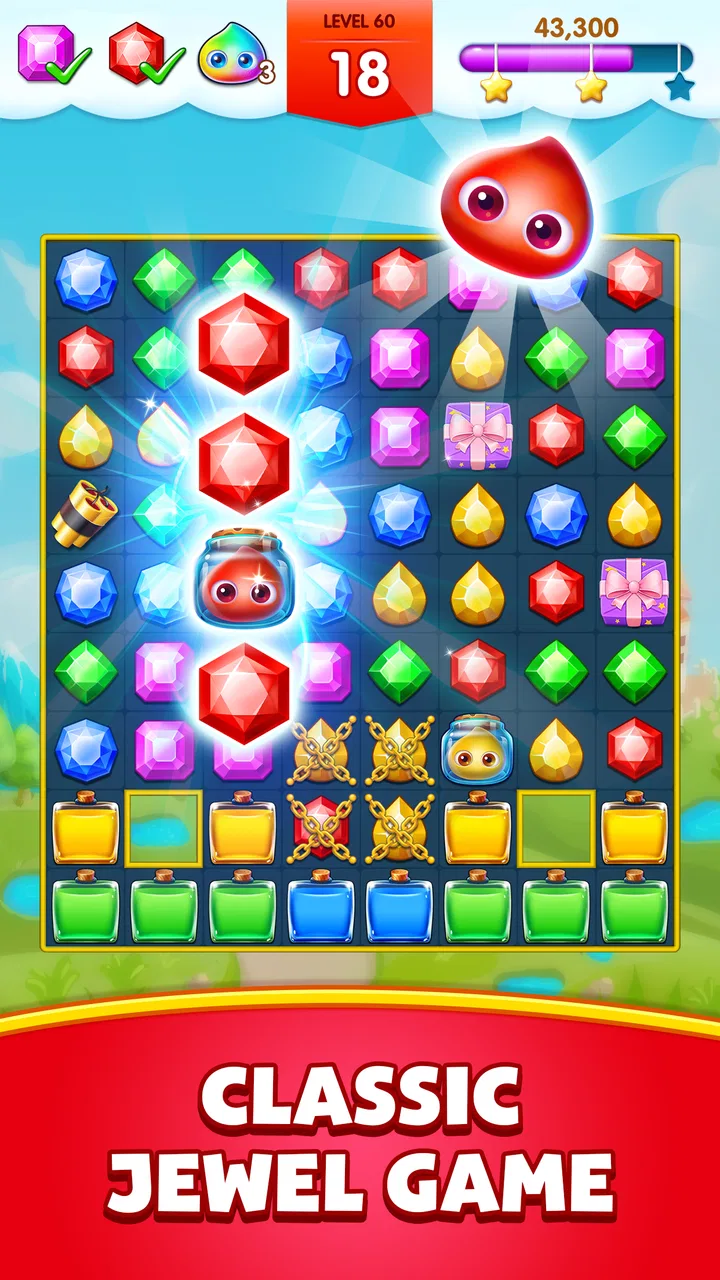
The opening action is deliberately clear. You look across a grid, identify two neighboring jewels, and swipe to exchange their positions. The aim is to create a matching line, which clears the pieces and opens space for new ones. That sequence gives the game its immediate physical rhythm: choose, swipe, clear, observe. There is no lengthy setup between the decision and its result, so even a spare minute can become a complete little puzzle session.
You May Also Like

 Blood Strike: 2.5 Anniversary
Blood Strike’s Loadouts Turn Every Drop Into a Tactical Gamble
A close look at Blood Strike’s custom loadouts: how fast access to signature weapons reshapes its battle royale rhythm, rewards preparation, and narrows the gap between fights.

 Pandora - Music & Podcasts
Pandora’s Music Is Easy to Start, but Harder to Recover
Pandora’s strength is its low-effort path from a seed to a station. Its weak spot is how much confidence it asks you to place in connection, setup, and quiet recovery.

 8 Ball Pool
 Is Built on Rivalries, Rematches, and Routine
A close look at the rivalries, rematches, shared routines, and unanswered safety questions that turn a quick pool match into a persistent mobile community.

 Samsung Music
’s Quiet Strength Is Playing What You Already Own
Its reach comes less from spectacle than from dependable access to a personal library. That simplicity is both the app’s strongest retention engine and its ceiling.

 AccuWeather: Weather Radar
AccuWeather Review: A Quick, Clear Forecast for Everyday Decisions
For everyday plans, the best forecast is the one you can understand quickly. AccuWeather makes rain timing, radar, and local conditions easy to act on, with a few trade-offs.

 Hill Climb Racing
Why Hill Climb Racing Still Turns Crashes Into One More Run
A tiny car, a bumpy hill and one more upgrade: Hill Climb Racing keeps resurfacing because its simple chaos makes every near-miss feel personal.
More From Our News Desk



I like that the basic interaction does not require a tutorial-heavy commitment. A new player can understand the central rule by experimenting. The useful skill is not fast tapping; it is noticing possible matches before moving anything. At first, I naturally looked for the most obvious three-jewel line. With more attention, I began checking what would fall into the empty spaces afterward. That change is important because the game becomes less about reacting to the current board and more about preparing the next one.
The best first move is not always the one that clears immediately. Sometimes a modest match creates a better arrangement, while a tempting move removes a useful position and leaves awkward colors scattered around the board. This is one of the more satisfying details of the design: the action is simple, but the board rewards patience. I often found myself pausing for a few seconds to compare two possible swaps instead of automatically taking the first available match.
For touch controls, that simplicity matters. A swipe is more natural here than a collection of buttons, and the game’s format suits one-handed play. I can imagine using it while waiting for a coffee, sitting on public transport, or taking a short break between tasks. The important point is that the game does not demand a long uninterrupted block of time before it becomes enjoyable. A single board can provide a small mental reset, even when I do not feel like starting a larger game.
There is also a useful distinction between learning the rules and mastering the board. The rules are accessible almost immediately, which helps explain why the game works for casual players. Mastery is slower because it depends on planning, recognizing likely cascades, and resisting moves that look attractive but produce little follow-up value. That gap gives the arcade format enough texture to remain interesting after the novelty of matching jewels has faded.
The feedback rhythm makes ordinary moves feel active
Every successful match produces a clear chain of feedback. The jewels vanish, the empty spaces close, and fresh pieces appear. That visual reset tells me exactly what my move accomplished without forcing me to read a score panel after every action. When several matches follow from one swap, the result feels especially rewarding because the board appears to continue solving part of the puzzle on its own.
This rhythm is the real engine of the experience. The action is a swipe, the feedback is the clearing animation and changing board, and the reward is progress toward solving the current challenge. Then the board presents a new arrangement, which creates another decision. The loop is easy to describe, but its timing is what makes it work: results arrive quickly enough to maintain attention, while the next move still requires a moment of thought.
I found that the strongest feedback is not necessarily the biggest visual event. A quiet match that opens a blocked area can be more valuable than a flashy-looking move that leaves no useful options. That encourages a more deliberate way of playing. Instead of judging success only by how many jewels disappear at once, I started evaluating whether the new layout gave me better choices. It is a small strategic shift, but it makes the familiar formula feel more involving.
The feedback also helps make the game approachable for different ages. The interaction is visual and immediate, so a player does not need advanced language skills or knowledge of a complicated fictional world. The Everyone rating fits that accessible presentation. At the same time, younger or less experienced players may still benefit from treating each move as a puzzle rather than swiping randomly, especially when the board offers several possible matches.
One practical tip improved my sessions: before making a match near the bottom, I scan the upper rows for a move that could cause a more useful drop. Clearing low pieces can change the entire board, but it can also destroy a promising arrangement. I also try to inspect the board after every cascade instead of planning several moves too confidently. New pieces can create opportunities that were impossible to predict, so flexibility is often more valuable than following a fixed plan.
That unpredictability is enjoyable when I am in the mood for a light puzzle, but it can also create friction. A carefully considered move may lead to a less helpful arrangement simply because of what appears next. Players who prefer complete control may find that frustrating. The game asks for good judgment, but it cannot turn every board into a perfectly manageable logic problem. Part of the appeal is accepting that the board will sometimes surprise me.
Where the reward comes from, and where it starts to fade
The reward structure is strongest at the moment a difficult-looking board becomes manageable. I enjoy spotting a match that clears a crowded section, then seeing the remaining pieces settle into a pattern with several possible choices. That feeling is more meaningful than simply accumulating points because it comes from understanding the board. The game gives me a small sense of improvement: I am not only matching colors, I am learning to read consequences.
Its free entry point also lowers the barrier to trying it. The game is available without an upfront purchase, and optional in-app purchases range from $0.99 to $99.99 per item. That range makes it worth paying attention during installation and play. I would approach the purchase options carefully, particularly if the device is shared with a child. The core appeal is the puzzle loop itself, so I would not treat spending as necessary to decide whether the game belongs in my routine.
The game’s popularity suggests that this style has broad appeal: it has over ten million installs, an average rating of 4.7, and around 578 thousand ratings. Those figures do not change my personal experience, but they do place the game among well-established casual choices rather than an obscure experiment. I can understand why it has reached a large audience. The rules are familiar, the sessions are easy to begin, and the reward arrives quickly after each successful action.
Still, the reward can become less distinctive for players who already have several match-three games installed. Many alternatives use the same basic pleasure of swapping, clearing, and watching pieces fall. Jewels Legend stands out more through its directness than through a radically different concept. If I want a calm, traditional puzzle without a large amount of narrative material, that is a benefit. If I need a strong theme or a new mechanical twist to keep me engaged, another game may be a better choice.
Another useful way to judge it is by the kind of attention it demands. This is not a reflex arcade game where speed is the main test. It is closer to a visual planning exercise with quick feedback. I can play casually, but I get more satisfaction when I slow down and search for a move that improves the board’s future shape. That makes it suitable for a short mental break, though less suitable for someone looking for intense action or a competitive adrenaline rush.
In an everyday scenario, I would use it after finishing a small task and needing ten minutes away from work. I could open the game, solve a few boards, and stop when my attention returns. The short-loop structure makes that possible, but it also creates a trap: because the next board appears so quickly, stopping can feel less natural than starting. I recommend deciding in advance whether you want one brief break or a longer session. The game is very good at turning “just one move” into another completed puzzle.
Why the reset keeps inviting another attempt
After a board is cleared or a challenge ends, the experience resets its immediate problem. That reset is important because it removes the pressure of the previous layout. A difficult arrangement does not permanently define the next moment; a fresh board gives me another chance to apply what I learned. The new starting position is the invitation to continue, not a dramatic story beat or a social obligation.
I appreciate this clean restart when I have been playing poorly. In a more demanding puzzle game, a mistake may require a long replay or force me to repeat a complicated sequence. Here, the reset feels lighter. I can try a different approach, pay closer attention to the lower rows, or simply accept that the previous board was unlucky. That forgiving structure is one reason I would recommend it to casual players who dislike losing progress after a single error.
There is a trade-off, though. A reset can make the long-term experience feel less personal than games built around a campaign, collection, or persistent world. The satisfaction comes from the immediate puzzle rather than from developing a character or unlocking a rich setting. For me, that is fine when I want a low-commitment pastime. Someone who needs a strong sense of journey may finish a session wondering what larger purpose the next board serves.
The reset also changes how I think about failure. Instead of treating an unsuccessful attempt as a dead end, I use it as information about my habits. Did I make the fastest match instead of the most useful one? Did I ignore a possible chain? Did I move too quickly after the board changed? Those questions give the restart a practical purpose. The next attempt is not identical if I have learned to inspect the layout more carefully.
For smoother play, I recommend waiting briefly after a cascade before swiping again. The board needs to settle visually, and rushing can make it easy to miss a new match or misread the available positions. I also prefer checking the entire grid rather than focusing only on the area where the last move happened. These habits are small, but they turn the game from random tapping into a more controlled routine without making it feel like work.
Device compatibility is another straightforward consideration. The current version is 3.23.0, and it requires Android 6.0 or later. That makes the game a practical option for many Android phones and tablets that are not running the newest software. I would still check the device’s available storage and system behavior before installing any game, but the stated operating-system requirement is not especially demanding for a modern Android user.
Who should choose it over other match-three options?
I would choose this game over a heavily themed alternative when I want the matching itself to remain the focus. There is less need to follow a plot, manage a character, or learn a large collection of special systems. That makes it particularly useful for quick sessions and for players who enjoy classic arcade puzzles in a familiar form. It is also a sensible choice for someone who wants an Everyone-rated game that can be understood without a long introduction.
I would choose a different option if my priority were social competition, a narrative campaign, elaborate events, or a more unusual puzzle rule set. Those alternatives can offer stronger long-term goals and more variety, even if they also require more time and attention. Jewels Legend is at its best when I value immediacy: open it, inspect the board, make a move, receive feedback, and decide whether the new arrangement deserves another turn.
The developer, LinkDesks - Jewel Games Star, has positioned the title in the classic arcade puzzle space rather than trying to disguise it as something else. That honesty helps set expectations. I do not come to it expecting a strategic masterpiece or a cinematic adventure. I come for the compact loop, the satisfaction of a well-read board, and the ease of restarting when a session ends.
There are also players who should skip it entirely. If repeated jewel matching feels monotonous after a few minutes, the familiar structure will not suddenly become compelling because the game is easy to start. It may also be a poor fit for anyone who dislikes optional purchase prompts or prefers games with a clearly finite ending. The free price is attractive, but it does not remove the need to decide whether the recurring loop suits your habits.
My verdict on the complete action-feedback-reward-reset loop
My overall impression is positive because the game understands its own purpose. The action is immediate, the feedback is readable, the reward comes from both clearing jewels and improving my board judgment, and the reset makes another attempt feel low-risk. Nothing in that loop is complicated, but the timing is effective. I can play casually, or I can become more deliberate when I want a little extra challenge from the same simple board.
The main limitation is also clear: this is a traditional match-three experience, so its appeal depends heavily on how much you enjoy that formula. It does not need to be more complicated to work, but players seeking novelty may notice the boundaries quickly. I also keep the in-app purchase range in mind and would use the game’s free access to judge its value before considering any optional item.
With a 4.7 average from around 578 thousand ratings, the broad response is easy to understand, and the game’s 2015 release gives it the feel of an established casual title rather than a new experiment. For me, it earns a place as a reliable break-time game: simple enough to start without preparation, thoughtful enough to reward better choices, and quick to reset when I want another try.
My recommendation is straightforward: install it if you want a classic jewel-matching puzzle for short, repeatable sessions and you are comfortable with a familiar design. Skip it if you need a story, social play, or major mechanical surprises. The reason I return is not a complicated progression system; it is the small satisfaction of making one good swap, watching the board respond, and seeing a fresh puzzle appear before I have quite decided to stop.
FAQs for Jewels Legend - Match 3 Puzzle
01What is Jewels Legend - Match 3 Puzzle all about?
Jewels Legend - Match 3 Puzzle is an engaging and addictive match-3 puzzle game where players swap colorful jewels to form a line of three or more gems. The game features various levels, each with unique challenges and goals, including clearing obstacles and collecting specific jewels, providing endless fun and strategic gameplay.
02Is Jewels Legend free to play?
Yes, Jewels Legend is free to download and play. However, it offers in-app purchases for players who wish to enhance their gaming experience. These purchases can include extra lives, power-ups, and other helpful items that can assist in progressing through difficult levels.
03What are the main features of Jewels Legend?
Jewels Legend boasts several exciting features, including over 700 challenging levels, stunning graphics, and special power-ups like bombs and rainbow jewels. The game also offers daily rewards, various game modes, and the ability to play offline, making it a versatile and enjoyable experience for puzzle enthusiasts.
04Does Jewels Legend require an internet connection?
No, Jewels Legend can be played offline, allowing users to enjoy the game without an internet connection. This makes it perfect for on-the-go entertainment, whether you’re traveling or simply without access to Wi-Fi or mobile data.
05Are there any tips for progressing faster in Jewels Legend?
To progress faster in Jewels Legend, focus on creating special jewels by matching four or more gems, which can clear larger sections of the board. Utilize power-ups strategically, and try to complete daily challenges for extra rewards. Also, plan your moves ahead to avoid running out of options on the board.
Pros
- Engaging gameplay with vibrant graphics.
- Offers daily challenges to keep interest high.
- Smooth performance on most devices.
- Free-to-play with optional in-app purchases.
- Numerous levels provide hours of fun.
Cons
- Repetitive ads can be intrusive.
- Some levels may feel too difficult.
- Limited lives can interrupt play.
- In-app purchases can be pricey.
- Requires a stable internet connection.

Jewels Legend - Match 3 Puzzle
Gallery